
Mont-Saint-Michel
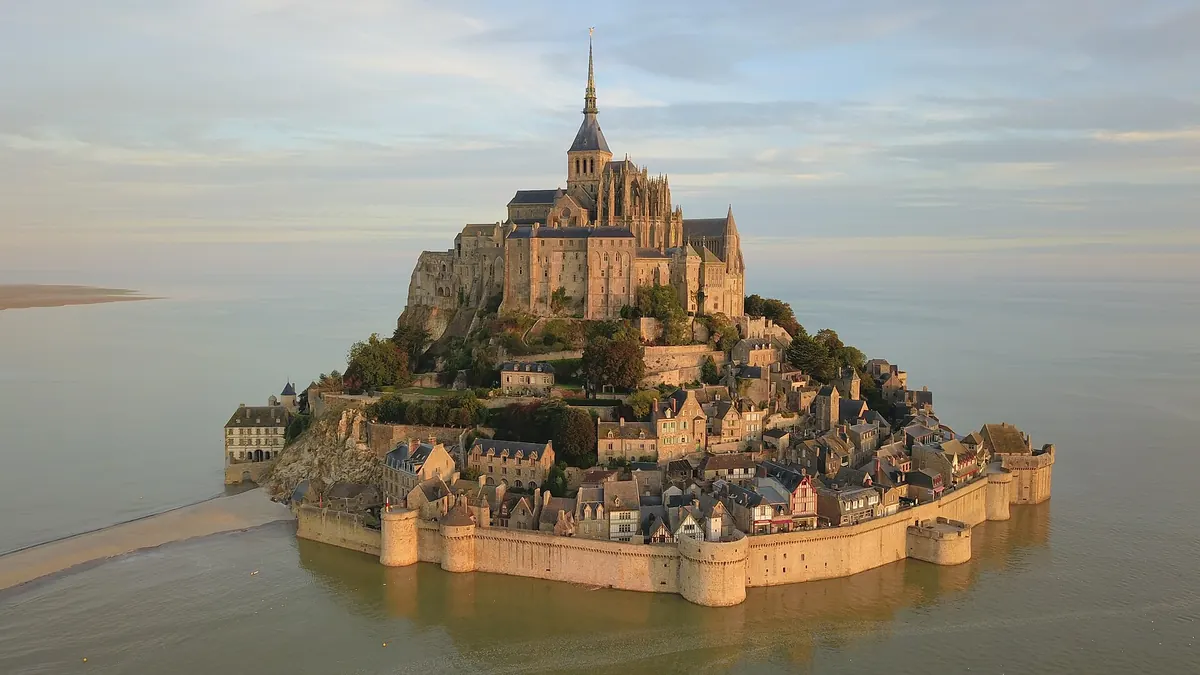
A rocky island in a vast bay between Normandy and Brittany, crowned by a Gothic abbey, with a medieval village wrapped round its slopes and ramparts. At high tide the sea can surround it. At low tide the sands stretch for kilometres. Pilgrims have come here for over a thousand years, and it's one of the most visited places in France. Arrive early or stay late, and sleep on or near the island if you can.
The abbey
- The abbey church, on the summit, 80 m above the bay, Romanesque in the nave and Gothic in the choir.
- La Merveille, the "marvel": three floors of 13th-century Gothic halls on the north side, with the cloister at the top, hanging over the bay.
- The great wheel once used to haul supplies up the side.
- A small community of monks and nuns still holds services. Visitors can attend.
Book an abbey ticket online in summer and on holidays. It's open late on some summer evenings.
The village
The Grande Rue climbs steeply from the gate, lined with shops, crêperies and hotels, and in summer it's packed. Escape along the ramparts or the small lanes and steps off the main street, and see the parish church of Saint-Pierre.
The bay and the tides
The tides here are among the biggest in Europe, up to about 14 m, and come in fast across the flat sands. Around the equinoxes, with the biggest tides, the sea covers the causeway and surrounds the island: tables of the tides are published ahead. Never walk on the sands alone: there's quicksand and the sea comes in faster than you can walk. Guided walks across the bay leave from Genêts and the Bec d'Andaine.
Getting there
- The car parks are on the mainland, about 2.5 km away, and charge by the day. A free shuttle, le Passeur, runs to the island, or walk across the footbridge in about 45 minutes, which has the best views.
- Trains run to Pontorson and Rennes, with buses from there.
When to go
Day-trippers arrive from about 10 am and leave at evening. The island lit up at night, quiet and reflected in the water, is magical. From October to March it's far calmer.
What to know before you go
- There are hundreds of steps, and no step-free way to the top.
- The famous omelettes are expensive. Try the lamb raised on the salt meadows instead.
On the way, see Saint-Malo, the D-Day beaches and the Bayeux Tapestry. See 9 days in Normandy and Brittany by car.

Comments